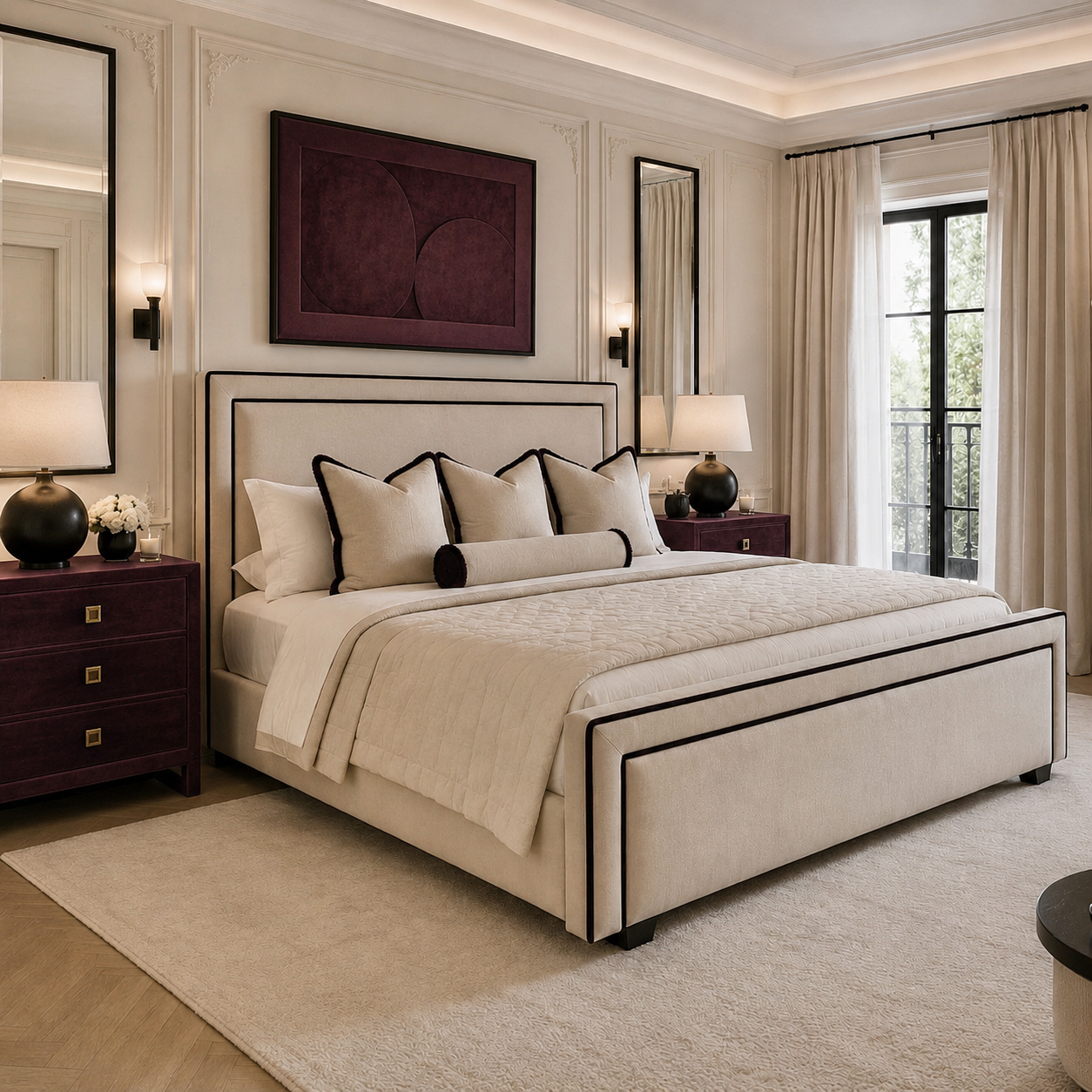
There is a particular kind of room that stays with you. Not because of what it contained — the furniture, the objects, the view — but because of what it withheld. Silence used deliberately. Space that refuses to be filled. Light that does not perform.
In our practice, we have come to call this considered restraint. It is not minimalism — minimalism often substitutes drama of emptiness for drama of abundance. Considered restraint is something older. It asks: what does this room need to feel complete? Not: what can we add?
The rooms we design for are not showrooms. They are for the long Tuesday evening. For the morning before the house wakes up. For the kind of stillness that makes a person feel, without quite knowing why, that they are exactly where they are supposed to be.
Material honesty is where this begins. Stone that looks like stone. Wood that looks like the tree it came from. Linen that softens, not stiffens, over years of use. When materials are true, rooms do not need to shout. They hold.
We think of interior architecture not as decoration but as orchestration. Light, proportion, texture, and silence arranged in a sequence that rewards the person who lives inside them — not just the person who photographs them.